The endangered mahogany gliders in North Queensland are landing positive results, thanks to work on habitat pathways.
When Powerlink’s Ingham to Tully transmission line needed replacement, a robust plan was formed to mitigate habitat loss for the mahogany gliders. A Federal Government EPBC Act approval was ticked off in 2010.
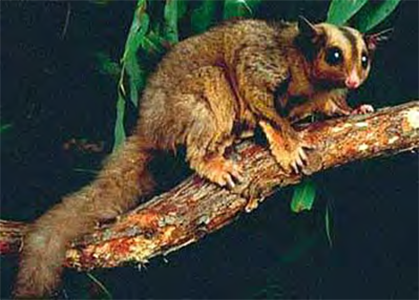
Powerlink secured 10 hectares of mahogany glider habitat as a direct offset and rehabilitated another 40 hectares of their habitat. Powerlink also introduced an Environmental Offsets strategy to offset the required clearing of 2.68 hectares of essential habitat for the mahogany glider. Strategy highlights include:
- rehabilitating 5.1 hectares of glider habitat in a presently disturbed area away from the transmission line corridor (including 3 year monitoring of rehabilitation),
- rehabilitating 37.5 hectares of glider habitat through active management and natural regeneration of the replacement transmission line corridor, and
- a substantial investment towards mahogany glider research and cyclone recovery efforts.
Mahogany gliders need a relatively open forest structure for efficient gliding.
The new transmission towers were raised so conductors could be strung over the canopy, allowing the habitat beneath to remain relatively intact. Glide poles were constructed to encourage mahogany gliders to cross and connect fragments of habitat.
Project research helped lay the foundations for further studies and has greatly contributed to a broader understanding of mahogany gliders, their habitat, the impacts of easements in their habitats, and how to best mitigate those impacts.
The project was a collaborative effort from a number of stakeholders including the University of Queensland, Queensland Parks and Wildlife Service, Indigenous rangers and other community members - all focused on mitigating impacts to the gliders and better understanding the species.